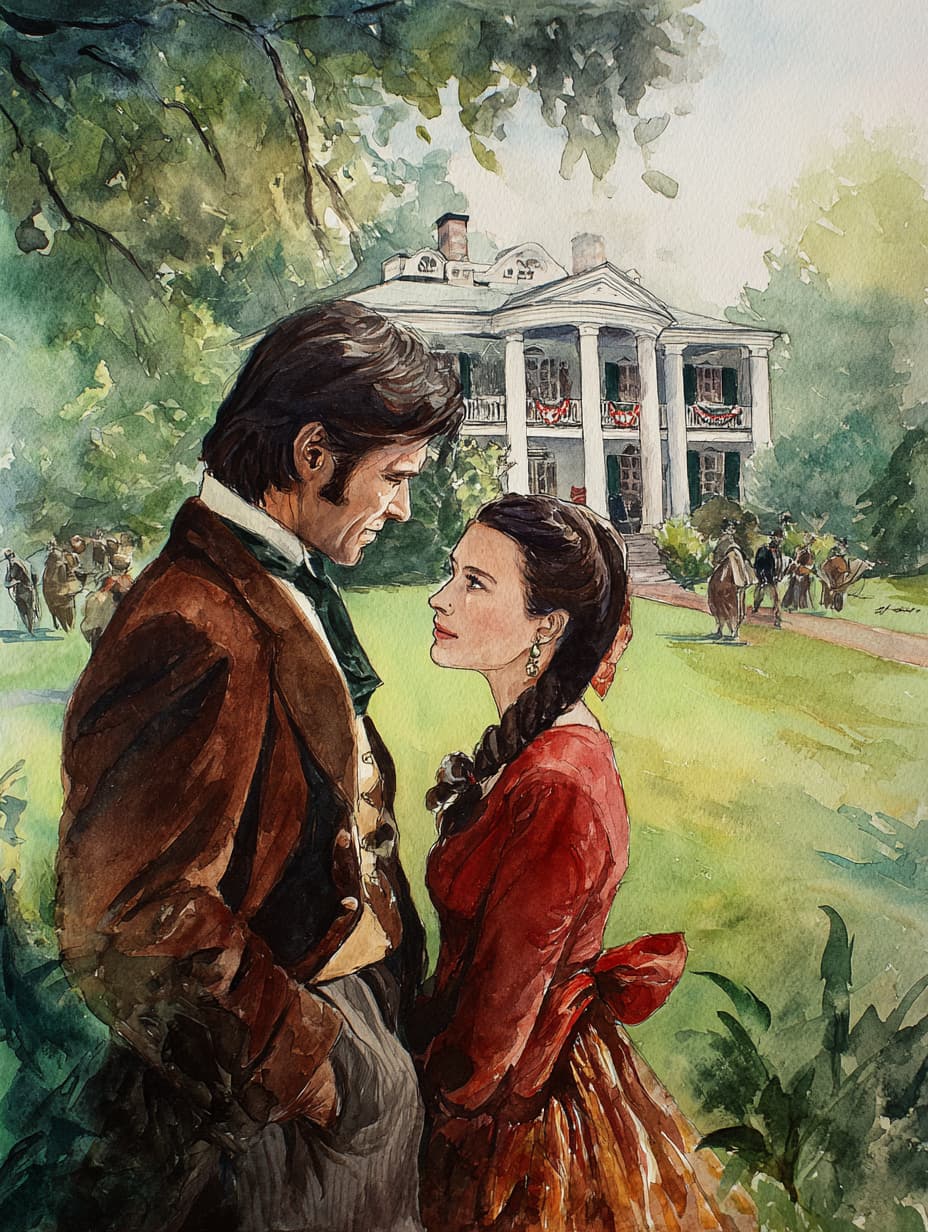
Few works of fiction have influenced the global perception of a place as profoundly as Gone With The Wind. Published in 1936, Margaret Mitchell’s novel – followed by the iconic 1939 film adaptation – became not only a literary and cinematic phenomenon but also a powerful cultural lens through which millions of people came to imagine the American South. At the center of that imagined world stood Georgia, particularly Atlanta, forever linked to romance, tragedy, resilience, and controversy.
Although Georgia possesses a rich and complex history that extends far beyond any single narrative, Gone With The Wind undeniably played a pivotal role in shaping how the state has been perceived internationally. The impact reaches across literature, tourism, cultural symbolism, and even political discourse, demonstrating how storytelling can redefine the identity of real places.
One of the most immediate effects of the novel and film was the romanticization of Georgia’s past. For global audiences unfamiliar with Southern history, the story presented a dramatic portrayal of plantation society, Civil War devastation, and postwar survival. Sweeping landscapes, grand estates, and emotionally charged characters created a vivid, almost mythic version of Georgia. The state became associated with elegance, nostalgia, and historical drama, often overshadowing the realities of its economic, social, and political evolution.
This romantic imagery proved remarkably durable. For decades, international readers and viewers equated Georgia with the world depicted in the story: sprawling plantations, Southern belles, and a society defined by honor and upheaval. Even those with limited knowledge of American geography came to recognize Atlanta as a symbolic location, frequently imagined through scenes of burning cities and heroic endurance.
The film adaptation amplified this influence exponentially. Cinema, with its visual power and global reach, transformed the narrative into a shared cultural reference. The imagery of Georgia’s landscapes and the dramatic destruction of Atlanta left lasting impressions. Unlike literature, which requires interpretation, film delivers immediate visual associations. As a result, Georgia’s identity became intertwined with cinematic memory, reinforcing emotional connections that transcended historical accuracy.
Importantly, this cultural impact was not purely aesthetic. The story also contributed to Georgia’s emergence as a destination of curiosity and pilgrimage. International visitors began seeking physical connections to the narrative: historic homes, museums, archives, and filming locations. Sites associated with Margaret Mitchell or Civil War history gained symbolic significance, partly due to their perceived connection with the fictional universe.
Tourism built upon this association, sometimes intentionally. Cultural institutions and local attractions recognized the enduring fascination surrounding the story. For many visitors, engagement with Georgia’s history became mediated through the framework established by the novel and film. The fictional narrative functioned as a gateway to broader historical interest, drawing attention to the region’s past, architecture, and heritage.
However, the influence of Gone With The Wind has never been purely celebratory. Over time, critical reassessments of the story reshaped its cultural meaning, introducing layers of controversy that also affected Georgia’s image. Modern audiences increasingly scrutinize the work for its portrayal of race, slavery, and Southern society. These debates, highly visible in global media, recontextualized the narrative from romantic epic to contested cultural artifact.
Consequently, Georgia’s association with the story became more complex. The state was no longer seen only as a backdrop for nostalgia but also as a symbolic site of historical tensions and evolving interpretations. International discussions about representation, memory, and historical narratives frequently invoked the novel and film, indirectly positioning Georgia within broader cultural debates.
This duality illustrates a fascinating paradox. A fictional story both elevated and complicated Georgia’s global image. On one hand, it brought extraordinary visibility and cultural recognition. On the other, it tied the state to contentious interpretations of history. Few regions experience such a concentrated fusion of admiration and critique derived from a single cultural work.
Another significant dimension of the story’s impact lies in its contribution to enduring Southern archetypes. Characters and themes from the narrative helped solidify widely recognized cultural symbols: the resilient heroine, the fading aristocracy, the turbulent transformation of society. These archetypes became shorthand representations of the American South in global consciousness, with Georgia implicitly serving as their geographic anchor.
For international audiences, especially those encountering American culture through media rather than direct experience, such symbols often carry disproportionate influence. Fictional narratives provide emotional coherence, simplifying complex histories into relatable human dramas. As a result, Georgia’s identity became partly constructed through narrative familiarity rather than historical nuance.
Yet the story’s influence also reveals the power of cultural production to generate curiosity about real history. Many readers and viewers, initially captivated by fiction, developed deeper interest in Southern history, the Civil War, and Reconstruction. While the narrative’s accuracy remains debated, its ability to inspire engagement with historical themes cannot be dismissed.
Moreover, the global endurance of Gone With The Wind demonstrates how cultural memory evolves. Interpretations shift across generations, reflecting changing values and perspectives. Georgia’s connection to the story thus continues to transform, shaped by contemporary conversations about heritage, identity, and representation.
Today, Georgia occupies a far more diverse cultural position than the one imagined in the early twentieth century. Atlanta is recognized globally as a major economic, technological, and cultural hub. The state is associated with innovation, film production, music, and political significance. Nevertheless, echoes of the narrative persist, illustrating the remarkable longevity of cultural associations formed through fiction.
The relationship between Georgia and Gone With The Wind ultimately underscores a broader truth about storytelling and place. Fiction does not merely reflect reality; it actively participates in constructing perception. When a narrative achieves extraordinary reach, it can redefine how entire regions are imagined, remembered, and debated.
In Georgia’s case, the story created a global symbolic identity that is both influential and contested. It introduced millions to the state, albeit through a dramatized lens, and embedded Georgia within one of the most enduring narratives of American culture. Even as historical understanding deepens and perspectives diversify, the cultural imprint of the story remains visible.
The legacy of Gone With The Wind therefore is not confined to literature or cinema. It resides in the ongoing dialogue between narrative, history, and identity – a dialogue in which Georgia continues to play a central role.