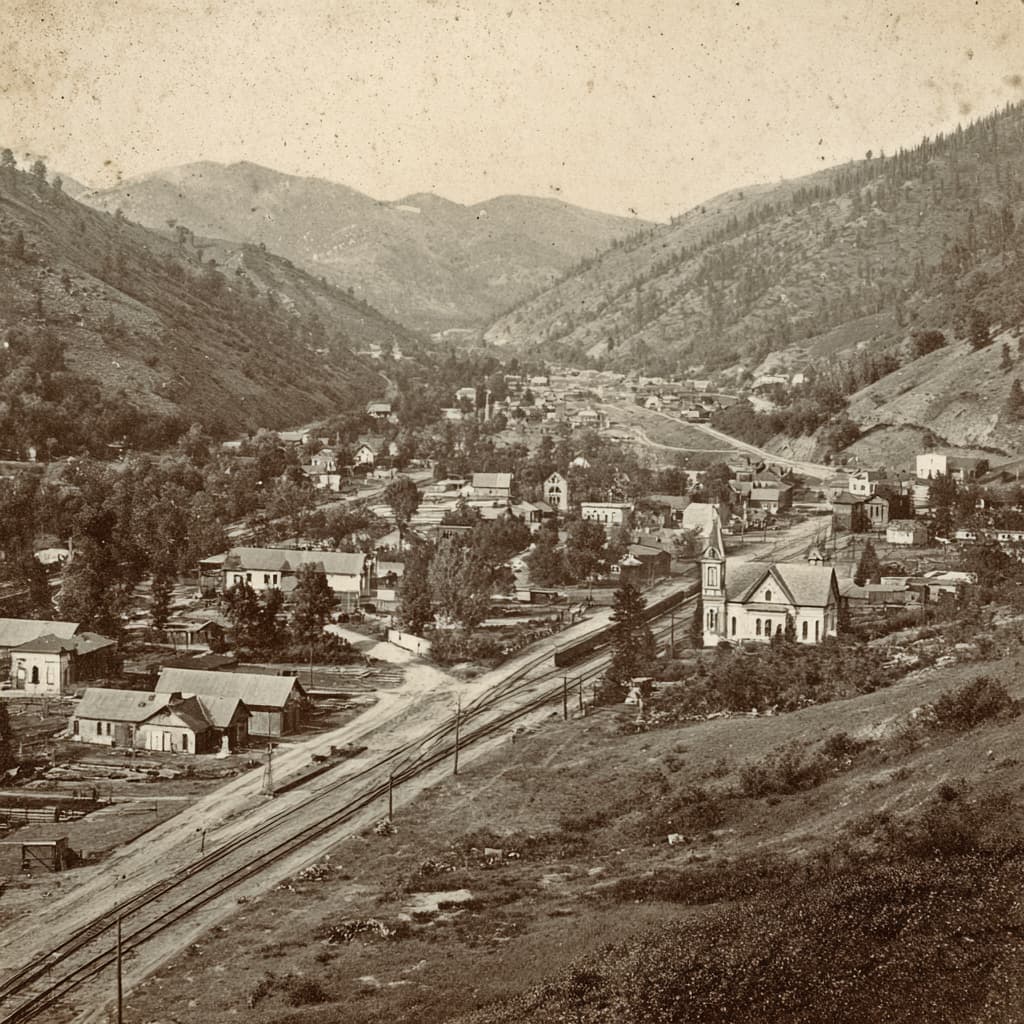
Railroads occupy a foundational place in Georgia’s historical development. Long before interstates and air travel redefined mobility, rail lines served as the arteries through which commerce, people, and ideas flowed. Their arrival did more than accelerate transportation; it reorganized the state’s economic geography, reshaped settlement patterns, and helped determine which communities would thrive. To understand Georgia’s transformation from a largely agrarian landscape into a diversified and interconnected region, one must examine the railroad era.
In the early decades of the nineteenth century, transportation posed persistent challenges. Much of Georgia’s interior was difficult to reach, and overland travel was slow, costly, and often unreliable. Rivers provided limited corridors for trade, but they could not adequately connect farms, towns, and emerging markets. As industrialization advanced in the United States, railroads emerged as a technological breakthrough capable of overcoming these barriers. Steel rails promised speed, consistency, and year—round operation — advantages that traditional routes could not match.
Georgia’s leaders were quick to recognize the possibilities. By the 1830s, railroad construction had begun to alter the state’s physical and economic landscape. Early lines were conceived not merely as transport projects but as instruments of development. They were expected to link producers with buyers, stimulate urban growth, and strengthen Georgia’s position within the Southern economy. Investment in rail infrastructure reflected a forward—looking belief that connectivity would generate prosperity.
No example better illustrates railroad influence than the emergence of Atlanta. Unlike coastal cities anchored by maritime trade, Atlanta originated from the logic of rail networks. Initially established at a rail terminus, the settlement gained significance as additional lines converged. Geography and engineering combined to position the city as a crossroads of movement. Businesses clustered around this advantage, followed by workers, services, and institutions. Over time, Atlanta evolved from a modest outpost into a dominant urban center, its trajectory inseparable from rail connectivity.
Railroads produced sweeping economic effects across Georgia. Agricultural producers, particularly those involved in cotton cultivation, gained improved access to distant markets. Freight that once required lengthy wagon journeys could now be transported with greater efficiency. Reduced travel times lowered costs and expanded commercial reach. These shifts strengthened Georgia’s integration into national trade systems and encouraged new forms of enterprise. Rail lines facilitated not only export but also the inward flow of manufactured goods and resources.
Industrial development followed the rails. Timber, minerals, and other raw materials could be extracted and shipped with greater feasibility. Manufacturing operations benefited from more reliable supply chains and broader distribution networks. Railroads thus contributed to economic diversification, gradually reducing the state’s dependence on agriculture alone. Regions served by rail infrastructure often experienced accelerated growth, while isolated areas faced competitive disadvantages.
Settlement patterns were also transformed. Towns frequently emerged or expanded along rail corridors, where stations became focal points of economic and social activity. Access to rail transportation increased land values, attracted investment, and encouraged population concentration. Communities linked to major routes enjoyed greater participation in trade and communication. Conversely, locations bypassed by rail development sometimes stagnated, illustrating how infrastructure decisions could shape regional fortunes for generations.
The social consequences of rail expansion were significant. Railroads altered perceptions of distance, enabling individuals to travel farther and more frequently. Mobility encouraged migration, urbanization, and cultural exchange. Rural residents could access cities more readily, while urban centers drew labor and talent from surrounding areas. Rail travel fostered new experiences of time and space, subtly influencing daily life and economic opportunity.
Railroads assumed heightened importance during periods of national conflict. During the Civil War, Georgia’s rail network became a critical logistical asset. Rail lines supported troop movements, supply distribution, and strategic coordination. Atlanta’s role as a transportation hub made it a central objective in military campaigns. The city’s capture disrupted Confederate operations, demonstrating how infrastructure could become both an instrument of war and a determinant of its outcomes. Railroads were no longer simply commercial tools; they were strategic lifelines.
The postwar decades introduced the task of rebuilding and adaptation. Damaged rail infrastructure required repair, while economic systems underwent reconfiguration. Railroads played a vital role in recovery, facilitating renewed trade and supporting industrial growth. Reconstruction—era investments reflected broader efforts to modernize the Southern economy. Rail lines continued to knit together regions, enabling flows of capital, labor, and goods that underpinned economic revitalization.
Technological progress further enhanced railroad efficiency. Improvements in engineering, safety, and operations increased capacity and reliability. By the late nineteenth and early twentieth centuries, Georgia’s rail network formed an essential component of regional development. Urban centers expanded, industries matured, and the state’s economic linkages deepened. Railroads contributed to the emergence of commercial corridors and reinforced Atlanta’s prominence as a nexus of activity.
Culturally, railroads left enduring impressions. Stations served as gateways between local communities and the wider world. Trains symbolized movement, opportunity, and modernity. The imagery of rail travel entered public memory, literature, and visual culture. Railroads became intertwined with narratives of progress, reflecting the optimism and tensions of a rapidly changing society.
Yet the dominance of railroads gradually encountered competition. The twentieth century witnessed the expansion of automobile ownership, highway construction, and aviation. These innovations redefined mobility and logistics. Passenger rail travel declined as personal vehicles offered flexibility, while trucking reshaped freight dynamics. Despite these shifts, railroads retained crucial roles, particularly in heavy freight and long—distance transport.
The historical imprint of railroads remains visible throughout Georgia. Urban layouts, economic centers, and regional linkages often trace back to patterns established during the railroad age. Atlanta’s ascent exemplifies how transportation infrastructure can catalyze urban growth. Many towns owe their origins or expansion to rail access, underscoring the long—term influence of connectivity decisions.
Contemporary perspectives highlight the complexity of railroad history. Railroads stimulated growth but also produced uneven outcomes. Infrastructure routes favored certain regions, industries, and communities. Construction required substantial labor and resources, sometimes under harsh conditions. Examining these dimensions provides a more nuanced understanding of how technological change interacts with society.
Today, railroads continue to support Georgia’s economy, particularly through freight operations that connect the state to national and global markets. They remain integral to logistics, industry, and sustainability discussions. Modern debates about infrastructure investment echo themes from the nineteenth century: efficiency, competitiveness, and regional integration.
The history of railroads in Georgia reveals how transportation systems can shape more than movement alone. Rail lines influenced economic structures, settlement dynamics, and strategic significance. They compressed distances, expanded markets, and redirected development trajectories. Their legacy persists not only in surviving tracks and stations but in the very organization of the state.
Ultimately, railroads were catalysts of transformation. They helped redefine Georgia’s place within the American landscape and contributed to the emergence of modern regional identities. Even in an era of digital networks and advanced transportation technologies, the railroad story remains central to understanding how Georgia evolved into the dynamic state it is today.